

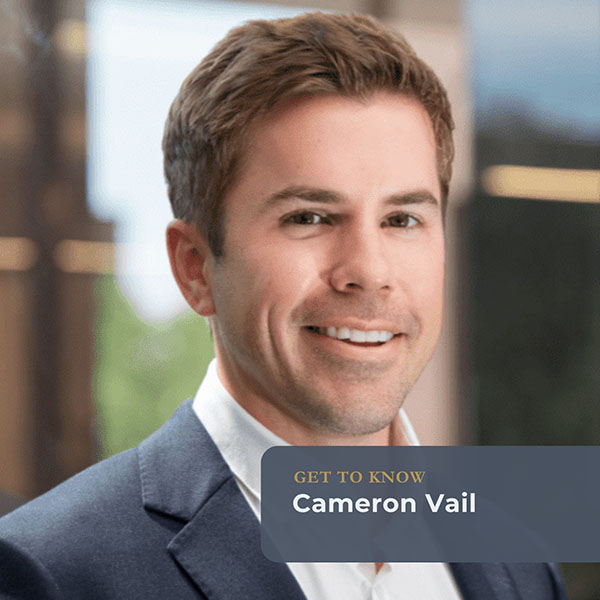
This month, our “Get to Know” takes us beyond the walls of IPL and into a conversation with Cameron Vail, Managing Director at SALI Fund Services. Cameron joined SALI in 2013 and today oversees and is responsible for the SALI business.
In our conversation, he shares how SALI works alongside private placement carriers like IPL, why the role of “administrator” no longer fully captures the value SALI brings to the market, and what continues to fascinate, and challenge, him about the evolution of Private Placement Life Insurance (PPLI).
And of course, no Get to Know interview would be complete without asking what’s currently on his TV watchlist.
That’s a timely question, because it’s one we’ve spent a lot of time thinking about internally.
Historically, the word “administration” in our market has often been associated with commoditized, back-office functions. Thi is important work, but largely operational in nature and typically disconnected from fiduciary oversight. In practice, a meaningful part of SALI’s value does involve those functions. We maintain significant accounting and operations teams that effectively provide business-process outsourcing for insurance companies and asset-manager subadvisors, work that would otherwise need to be performed internally by those partners.
That said, we’ve come to believe that the label “administrator” no longer fully captures the role SALI plays in the private placement ecosystem.
In mid-2025, we introduced an internal framework titled “More Than an Administrator” to better articulate that distinction. While operational execution remains foundational, our clients increasingly rely on us for much more. We view SALI (and believe our clients would agree) as a fiduciary-minded partner; a multi-channel expert that works across carriers, brokers, and asset managers; a consistent counterparty in a fragmented market; a facilitator of new structures and market access; a tech-enabled platform; and a curator of best practices.
In short, administration is what we do. Stewardship, coordination, and market enablement are how we create long-term value.
At its core, SALI exists to facilitate the compliant delivery of PPLI and PPVA through properly structured IDFs and SMAs. Everything we do is oriented around that mission.
We focus our efforts across three primary constituencies: insurance brokers, insurance carriers, and asset managers. Based on more than two decades of experience, we view this as a fundamentally demand-driven market. Collaboration with a carrier like IPL typically begins when a client identifies a specific investment strategy they want available on the platform.
From there, our project-management teams work closely with IPL to structure, review, and approve new IDF or SMA offerings, often on a timeline that runs concurrently with the client’s underwriting process. Internally, we operate under the mantra that time is the enemy of all deals. Our goal is to ensure that investment approval does not become an unnecessary friction point once client momentum has already been established.
To keep expectations aligned and execution tight, our front-office teams hold recurring calls with IPL to review the development pipeline, proactively address potential issues, assess existing funds on the platform, and identify opportunities to streamline day-to-day collaboration. At the same time, our back-office teams remain in constant communication on capital activity, accounting, and ongoing fund operations.
All of this is supported by SCOPE, our proprietary, Salesforce-backed technology portal, which serves as a centralized system for capital activity tracking, accounting data feeds, and business-development workflows across all stakeholders.
Its evolution.
When I joined SALI in 2013, nearly every conversation started at square one: What is PPLI? Is it real? How long has it been around? Education dominated the dialogue.
Fast-forward to today, and the conversation has fundamentally shifted. Increasingly, the question is no longer what PPLI is, but why someone doesn’t have it yet. We’ve gone from struggling to find sponsors and attendees for small industry events to managing capacity constraints because demand exceeds space.
What’s been particularly striking is the caliber of institutions now participating in the market. Many of the world’s most respected financial organizations have made meaningful, long-term investments in PPLI infrastructure, talent, and distribution.
Having witnessed that transformation firsthand, I remain more optimistic about the next twenty years of this industry than I was about the prior twenty. The growth feels both durable and intentional.
That it is not, and should never be positioned as, a free lunch.
The tax benefits associated with life insurance exist for a reason, and they come with real constraints. Those benefits are earned through true policy ownership, which necessarily limits discretion over underlying investment selection. That trade-off is not a technicality; it is the foundation of the product’s integrity.
Over the years, we’ve occasionally been referred to, sometimes pejoratively, as the “investor control police.” We actually take that as a compliment. If SALI is going to succeed over the long term, the broader industry has to succeed as well. And for that to happen, we must collectively uphold disciplined policies, thoughtful case design, and consistent behavior that protects the structure itself.
Compliance isn’t an obstacle to growth. It’s what makes sustainable growth possible.
Like many people in this industry, my path wasn’t linear.
I started in higher education because I wasn’t entirely sure where I wanted to land professionally, particularly since “Insurance Dedicated Funds” wasn’t exactly a childhood aspiration. I earned a BBA in Finance from the University of Texas and later completed a Master of Science in International Management at the Paris School of Business, studying in both Paris and Shanghai.
After graduating and finally slowing down from international travel, I did what many early-career professionals do: I relentlessly reached out to anyone who would take my resume. After months of persistence, someone within SALI finally agreed to interview me, and I joined the firm in March of 2013 as a Business Development Analyst. At the time, I was employee number 13, and the firm was just approaching $1 billion in assets under administration.
The timing couldn’t have been better. I benefited from foundations laid by others in the prior decade and had the opportunity to grow alongside the company, progressing through roles as Analyst, Manager, Director, COO, and ultimately Managing Director. Along the way, I’ve had the privilege of learning from exceptional mentors and witnessing SALI’s evolution from a $1 billion platform to more than $42 billion today, including multiple acquisition events.
SALI has consistently satisfied both the analytical and entrepreneurial aspects of what I’ve always looked for in a career, and it’s been deeply rewarding to grow with the firm over the past decade.

#1 – I just finished Season 1 of Pluribus. Season 2 will determine whether it stays in rotation.
#2 – My wife controls the remote, so I’ve become fully immersed in the Bravo ecosystem. Southern Charm gets the nod here.
#3 – With SALI based in Texas, I felt obligated to try Landman. I’m three episodes in so far.


